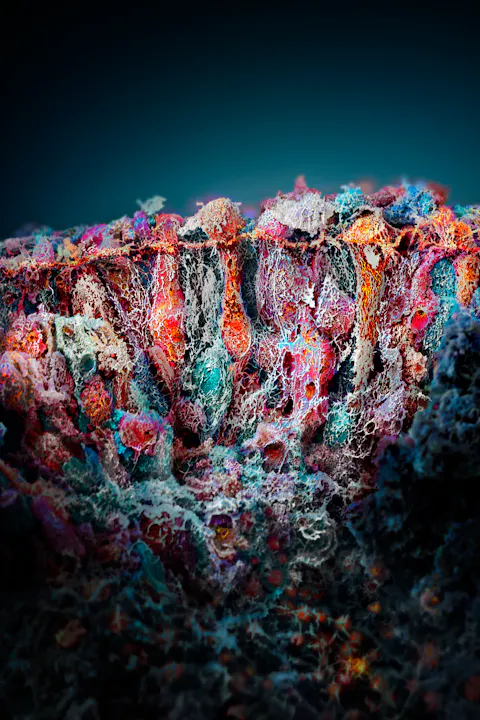
When Project Team Leader Frank Schäfer from Technical Research & Development (TRD) in Basel received the latest molecule from his immunology research colleagues from Novartis Biomedical Research in 2013, his initial enthusiasm could have easily been greater. What his colleagues presented to the experienced scientist posed very specific developability challenges for which Schäfer and his team had no ready-made solution. But this is the nature of the work at TRD, which, with its roughly 3,000 associates worldwide, has the responsibility to develop all the steps between research findings and a stable, high-volume manufacturing process. Their tasks include evaluating and providing efficient and safe syntheses as well as purification processes for the active ingredient and for all formulation steps leading up to the final dosage form of the drug, which, in this case, is a tablet. The entire process is like building a bridge, where despite all the care taken, it is uncertain whether the other side will ever be reached.
Challenges right from the start The story started like this: In 2013, Novartis Biomedical Research handed over an innovative, covalent compound to the TRD team along with a so-called compound personality assessment where its properties are listed. These properties define the issues that the team might meet in developing the drug and some of which need tailor-made solutions. In this case the compound had an exceptionally high reactivity and low solubility – properties that posed a particular challenge for the TRD team. The high reactivity is due to the covalent design of the molecule and can lead to stability problems. Furthermore, its low solubility meant it would be difficult to dissolve and absorb into the bloodstream, limiting its distribution throughout the body. Sending the molecule back to the research team with the request to create an easier-to-handle version was, of course, not an option. But this type of challenge is a normal part of the job for TRD teams and is more of an additional motivation than a burden.
Efficient coffee breaks One of the keys to the ultimate success was the intensive teamwork that involved constant communication between chemists and analysts as well as employees from the quality assurance and formulation departments. The fact that most of the key members of the TRD team were based in the same building on the Novartis Campus significantly accelerated progress. “I didn’t actually need to schedule any meetings for technical discussions,” recalls Project Team Leader Frank Schäfer, who was intensively involved in the early part of the project. “We met several times a day at the coffee machine. There we discussed the latest results of the laboratory tests and then decided on the next steps.” However, traditional meetings were obviously also part of the journey. Technical Project and Portfolio Management Director Isabelle Gallou, who took over the project from Schäfer in 2015 from Schäfer in 2015, still remembers one particular meeting vividly: “The meeting room was actually only meant for six people, but Frank had invited eight, so we shared the small room as best we could.” The instructions were clear: All open items on the long to-do list had to be discussed and completed before the meeting could end. “When we finally managed to do that half an hour after the official end of the meeting, everyone was happy to get some fresh air. But it was definitely worth the effort...”, they recalled amusingly. It grabs everything To demonstrate the molecule’s particularly high reactivity, Gallou uses a metaphor. “You can imagine, as an example, the molecule as a human hand, grabbing everything it can reach. At one point during development, we were using a certain solvent to isolate the drug substance, and this hand literally grabbed one molecule of the solvent and, like a snowball, created what we would later find out were oligomers.” The downstream processes were no longer working as before. The first observation occurred with the milk-like suspension in which the molecule was mixed with stabilizers as a first step in the process of drug production. During development, the process was improved to obtain this suspension in higher concentration for better process efficiency and sustainability with lower solvent and energy usage as well as reduced cycle time. However, the suspension suddenly was no longer stable over time and the drug substance precipitated: The normally very liquid suspension clumped together and looked like milk gone bad. “So, we had these clumps in our highly concentrated suspension, and we reduced the concentration to its original composition to try and solve the problem that way for a while,” Gallou says. “But after a few months, the day came when another issue arose: The active ingredient could suddenly no longer be recrystallized properly, and the yield dropped by more than half. “This was really surprising, especially as the active ingredient is so poorly soluble.” In both instances, the team had to take a step back and examine each process to identify the cause. It turned out that both observations and issues were related: oligomers. During analytical testing of the first internal synthesis campaign oligomers were observed on the final chemical step. They were ultimately confirmed by isolation and with a newly developed analytical method. “We checked everything, and the problem only became apparent when the analysis was run for much longer than usual. That’s how we found the oligomer chain in the suspension as the cause of the failed recrystallization and of the nanosuspension clumping. The chemists eventually modified the crystallization procedure by selecting an alternative solvent to prevent the problem from occurring again,” Gallou explains.
Like powdered sugar Another fundamental problem was the poor solubility of the active ingredient. In initial trials, the active ingredient was not absorbed by the body at all but was excreted immediately due to its poor solubility – meaning that the drug would be completely ineffective. At such moments, the question arose whether it still made sense to continue the trials. However, giving up was not an option for the TRD team, as Frank Schäfer explains: “Since the solubility of a substance cannot be changed, we searched intensively for another way. Finally, we came up with the idea of increasing the surface area of the active ingredient and using this larger surface area to at least influence the speed at which the substance dissolves.” One of the scientists on the team compared the concept to dissolving sugar in coffee. It doesn’t matter whether you use a sugar cube or powdered sugar – both are sugar – but the powdered substance dissolves much faster. However, this idea presented the TRD team with another problem: How could the surface area be increased? The team finally found the solution in a special piece of equipment that was available in the same building – in fact a remnant from a discontinued innovation project. This device only had a capacity of a few milligrams, but it enabled the team to test the new process. To do this, the active ingredient is pressed through millions of tiny ceramic balls with the addition of a suspension of surfactants and other additives until it reaches the desired size.
This so-called wet-media milling process ultimately reduced the particle size of the active ingredient to the nanometer range, allowing for fast dissolution. With this, an extremely important milestone had been reached: The active ingredient could finally be absorbed by the human body. Going big Once all problems had been overcome, the TRD team was able to document a stable and complete production process that, following wet-media milling, also included further steps such as spray granulation, blending, tableting, and coating of the final drug. Once this process had been developed, it was transferred to the Novartis pilot plant for the production of larger quantities of the drug for clinical trials. The many innovative steps taken by the TRD team during the long development process and after countless setbacks resulted in the first Novartis nanoparticulate oral drug. Now, the entire TRD team had finally reached the other end of the bridge they had been building continuously and patiently for so many years, overcoming countless potholes and obstacles. They were able to hand over the production instructions to Novartis Operations to the best of their knowledge and belief. The final large-scale production facilities were installed in Ljubljana, Slovenia, enabling the production of up to 170 kilograms of nanosuspension in a single run. When Gallou thinks back to the development of this new drug, she also remembers many other challenges she and the entire TRD team face in their work for Novartis: “Every day we are learning something new, and every molecule has its own properties and personality. The problems we have to solve are like a child growing up – it presents new challenges at every stage – or like a bridge that we have to build and cross, no matter how many bumps appear along the way. Every development journey has its own unique fascination.”
Production Going together. Crossing a bumpy bridge Text Michael Mildner. Photos Annick Ramp and Adriano Biondo. Videos Stevie Michelsen. The time it takes from the discovery of an active ingredient to its commercial use varies for each drug and is difficult to predict – without any guarantee of success. Sometimes, there are no points of reference at all because developers are breaking new ground. This was the case with a highly complex medical innovation that Technical Research & Development developed into an efficient drug.
Technical Research & Development is a vital part of the drug development process.
The grinding material proved instrument in the development of this covalent binder.
Before medicines are produced in large quantities, the process is tested and perfected in these smaller units that also cater clinical trial needs.
Jasmin Muminovic from TRD prepares the production process.
Each step is prepared meticulously.
Although many production steps are automated, many processes require human involvement.
Thanks for reading Live.Magazine
Stay connected by subscribing to our newsletter
SubscribeBy submitting your email, you consent to Novartis AG collecting and processing your email data for Novartis internal use, in accordance with our privacy policy, and by protected technical means.